|
|
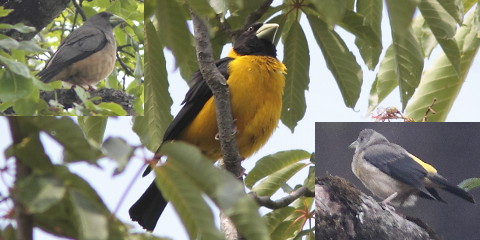
| In the Chronology: • New Bird from Gabon, Africa (under World-wide Ornithology) on 17 August 2008 • Mottled Wood Owl, Strix Ocellata on 16 August 2008 • Comb Duck updated on 11 August 2008 • Pallas's Fish Eagle updated on 9 August 2008 • Long-legged Buzzard, Buteo rufinus on 5 August 2008 • Pied Falconet, Microhierax melanoleucos on 1 August 2008 • Jerdon's Baza, Aviceda jerdoni on 26 July 2008 • Dollarbird, Eurystomus orientalis on 23 July 2008 • Kaziranga FBR updated on 13 June 2008 • Spot-billed Pelican, Pelecanus philippensis on 10 June 2008 • Blue-throated Flycatcher, Cyornis rubeculoides updated on 7 June 2008 • Maroon Oriole on 5th Jun, 2008 • Sykes's Lark on 3rd Jun, 2008 • Greater Adjtant updated on 27th May, 2008 • Layout modified with lots of Object Oriented Programming for Nameri FBR on 31st Mar, 2008, comments welcome; webmaster at birdpoints dot com • White-browed Shortwing on 27th Mar, 2008 • Blue-winged Minla on 20th Mar, 2008 • New Indonesian Bird Species (under World-wide Ornithology) on 17th Mar, 2008 • White-rumped Vulture on 13th Mar, 2008 • Pallid Harrier on 10th Mar, 2008 • Wallcreeper on 28th Feb, 2008 •Web submissions, updated on 22nd Feb, 2008 Bill black; eyelids orange; irides dark brown; claws dusky; soles
of the feet yellowish (Jerdon). Length about 18.5; tail 8; wing 14;
tarsus 2.25; bill from gape 1.6... Blanford, W.T. 1895-98. The Fauna of
British India, Including Ceylon and Burma. Birds.- Vol. III-IV.
|
|
This handsome Buzzard is found throughout all the northern and central parts
of India, frequenting the plains and low cultivated lands, especially irrigated
fields, edges of tanks, &c. I have met with it in the Deccan, and in Central
India, but most abundant in the Gangetic valley above Dinapore. It is also found
in Nepal, and all the sub-Himalayan regions. It generally sits on a low, tree,
and...
Distribution.
Upper Assam, the Daphla and
other hills to the northward, and the Naga hills to the southward.
A specimen was obtained by Godwin-Austen from Lukhipur, Cachar, but
none was seen by Hume in Manipur...
Coloration. Adult. Middle of crown and the long Spizaetus-like crest black;
forehead, supercilia, sides of neck, and hind-neck deep rufous with black streaks;
lores grey with black bristles; upper parts from the neck dark brown; scapulars
and upper tailcoverts with...
In habits the Broad-billed roller (Dollardbird - Ed) differs conspicuously from
C. affinis. (Indian Roller 'affinis' - Ed) During the day it, as a rule, keeps
to the forest, or, at any rate, within its immediate vicinity, and is not at
all active, remaining seated on the topmost branches of some tall dead tree
for hours at a time. In the morning and evening, but especially during the latter
time, it is very active; it then comes...
This species was in considerable force at the Logtak lake; there must have been
nearly a hundred when I was there, but later in the season, according to the
boatmen, they visit the lake in thousands.
Generally diffused throughout the forests of the western and Eastern Hills, from
elevations of 3,000 to nearly 6,000 feet; never seen in the basin. They
go about singly or in pairs, in the tops of the trees and have a rather pleasant...
765 Spizalauda Deva, Sykes. The Small Crown-crest.
Pallas Sea Eagle is a common and permanent resident. There is not a jhil of
any pretensions in the Division that is not frequented by a pair or two of these
Eagles, nor a river that cannot boast of their presence. Nevertheless it has,
in my opinion, little title to he considered a Fishing Eagle. It seldom, as
a rule, attempts...
Again I have 338.- Brachypteryx cruralis, Bly., from the Khasi hills and Shillong,
but never met with it in Manipur, nor do I know of its having been found elsewhere
in Assam, Sylhet, Cachar or British Burmah, though Ramsay obtained it just outside...
This very pleasingly plumaged Leiothrix is found in the Himalayas
from Nepal to Bootan, and also in the hills of Assam. It is common
near Darjeeling, from 3,000 to 6,000 feet, being...
They are to be found about their nests from December to March. I have seen fully-fledged
young in a nest in the first week in March. The nests are generally placed on
Peepul trees, but even the toddy palm tree is sometimes chosen. One nest, which...
The Pale Harrier
is only a cold weather visitor, but a very common one. It arrives
as early as September and leaves as late as the end of April, though
the majority may be said to leave about the end of March...
Bill and claws black; feet black, tinged with brown; irides dark brown. The
sixth and seventh primaries have the spot on the inner webs golden yellow. Mr.
Hodgson gives a figure of this species in which the yellow spots on the wings
are pro-minently shown, but he says:- "Golden drops of alars often wanting."
Sparingly distributed along the entire
coast.
Upper mandible brownish black; lower mandible fleshy brown, greyish horny at
base; irides light to dark brown, sometimes reddish brown; feet fleshly buff;
claws pale brown horny. The sexes hardly differ in colour. The upper surface
is tinged with olive; the moustache is darker in the breeding season (being
then nearly black) than in winter; the lores are dark brown; and there is a
conspicuous ring of white feathers round the eye; the flanks are pale olivaceous
streaked with white.
I shot at the beginning of 1872 two specimens of a Pratincola, (probably female,
the sex was unfortunately not determined), which appears to be distinct from
any other yet known. General plumage, above dull brown, all the feathers margined
with pale isabelline or fulvescent whitish, most broadly on scapulars and tertials,
narrowly on the quills; upper tail-coverts nearly uniform pale fulvescent or
sandy only along the centre of a darker hue. Central tail feathers brown, the
succeeding also brown and very pale rufescent fulvous about the basal half of
both webs, (not along the shafts), the rufescent colour gradually, not abruptly,
passing into the brown; outer web of last tail feather wholly sandy or pale
fulvescent white, and all have pale tips which easily wear off. Lores and supercilium
sandy white; ears dusky. Lower plumage fulvescent white throughout, with a slight
shade of cream colour; all the feathers on their basal halves are dark slaty,
which is also the case on the upper plumage.
Bill and feet nearly quite black...1
Referring to my remarks, ante Vol IV., p.15, relative to the separation of
the males and females of this species in the cold weather. I may
mention that it has since occurred to me that the females may assume
the plumage of the males after breeding, which would account for
the number of what I imagined to be males found congregated separately
in the cold weather. The young birds of the year are all in the
same plumage at first, viz., that of the male, as I flushed several
broods last rains and verified the fact myself. The sentence "I
have shot a large number of females without flushing a male"
should be expunged, as I find on reference to my game books that
all of the birds alluded to were in the garb of the male. This tends
to support the suggestion I have now brought forward, and it remains
to be decided whether the gaudy dress of the female Painted Snipe
is seasonal or not...